
You are on the shoulder of I-75 near Cincinnati, it is dark, and your tire is flat. The spare is in the trunk, and the car jack is somewhere under the carpet. This is the moment when a little knowledge about a car jack tire change separates a twenty-minute fix from an hour of frustration. Most drivers never think about their jack until they need it. I have seen too many people struggle with the factory scissor jack or, worse, trust a cheap hydraulic jack that was never meant for roadside use.
The Jack That Came With Your Car
Every new or used car comes with a jack, usually a scissor type that lives in a foam tray next to the spare tire. These jacks are designed for one job: lifting one corner of the vehicle just high enough to swap a flat for a spare. They are not meant for heavy maintenance or repeated use. The factory scissor jack is compact, light, and slow. You crank it by hand, and it can feel like you are lifting the car with a drinking straw. But for a car jack tire change on the side of the road, it is the tool you have.
The biggest mistake I see is people trying to use the factory jack on soft ground. Asphalt is fine. Gravel, mud, or grass is a recipe for a tipped car. I once watched a neighbor try to change a tire in his front yard with the scissor jack. The jack sank into the sod, the car came off the jack stand, and he had to call a tow truck. Learn from that.
How to Do a Car Jack Tire Change Safely
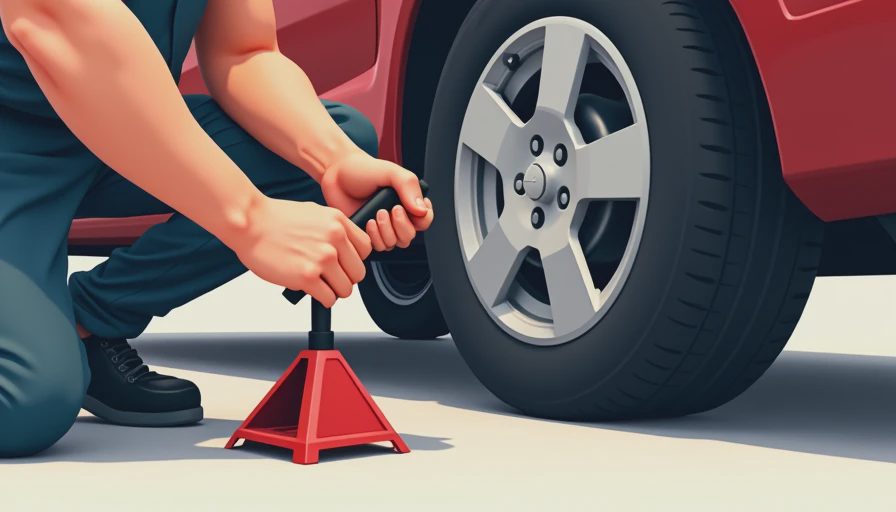
If you need to do a car jack tire change, the steps are simple but the order matters. First, find level, hard ground. Put the car in park or first gear, set the parking brake firmly, and block the wheel diagonally opposite the flat tire with a rock or piece of wood. Loosen the lug nuts a half turn before you lift the car. That way the wheel does not spin when you apply force. Then position the jack under the manufacturer-approved lift point. That is usually a reinforced seam or a notch along the pinch weld. Check the owner manual if you are not sure. Lifting from the wrong spot can dent the rocker panel or bend the frame.
Crank the jack until the tire clears the ground by an inch. Remove the lug nuts fully, pull the flat off, and put the spare on. Tighten the lug nuts by hand in a star pattern, lower the car, then torque them with the wrench. Do not stand on the wrench or jump on it. Just get them snug. A car jack tire change done this way keeps you safe and gets you back on the road.
What If You Want a Better Setup?
Many owners swap the factory jack for a small hydraulic floor jack or a bottle jack. Harbor Freight sells a 1.5-ton aluminum floor jack for about $60 that is far easier to use than the scissor jack. But you still need a jack stand. Never crawl under a car supported only by a jack, even a hydraulic one. The seal can blow, and the car comes down fast. For around $120 total, you can have a good floor jack and a pair of jack stands that will make any car jack tire change feel like a garage job. Just make sure the jack fits in your trunk or under a seat. Some of the compact floor jacks are small enough to stash in a corner of the cargo area.
I keep a small piece of plywood in the trunk to put under the jack on soft ground. That simple addition has saved me more than once when I had to change a tire on the shoulder of a dusty back road. It is cheap insurance.
The One Thing Most Drivers Forget
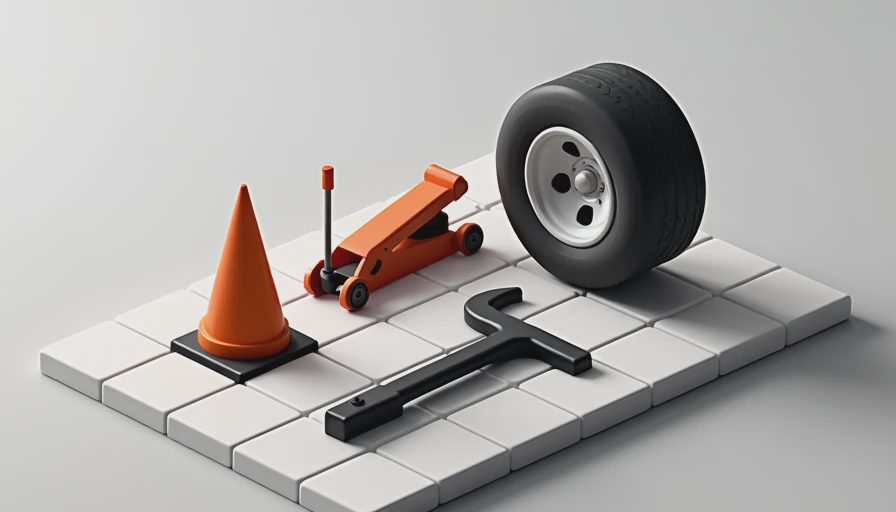
When you are in a hurry to finish a car jack tire change, it is easy to skip the parking brake and the wheel chocks. Do not. A car that rolls even a few inches while it is on the jack can push the jack over and drop the car onto the wheel, the rotor, or your foot. I have seen a car roll off a jack because the driver forgot the parking brake. That is a tow truck call and a damaged car.
Also, check your spare tire pressure before you need it. A donut spare at 20 psi will not get you far safely. Every six months, air the spare up to the recommended pressure. Same for the jack operation. Try cranking it once in your driveway so you know how it works. The factory jack often has a slight quirk in how the handle engages. Figure that out in your garage, not on the side of the road.
A car jack tire change is a basic skill that every driver should practice once. Donot shop the test drive. Shop the next three years. That includes the tools you might need to keep those years rolling. A reliable jack setup and a few minutes of preparation can save you an expensive tow and a long wait on a dark highway. Do yourself a favor: take your spare and jack out of the car this weekend, test them, and put them back knowing you are ready.


